
Legal Access Through Women Yearning for Equality Rights and Social Justice (L.A.W.Y.E.R.S)
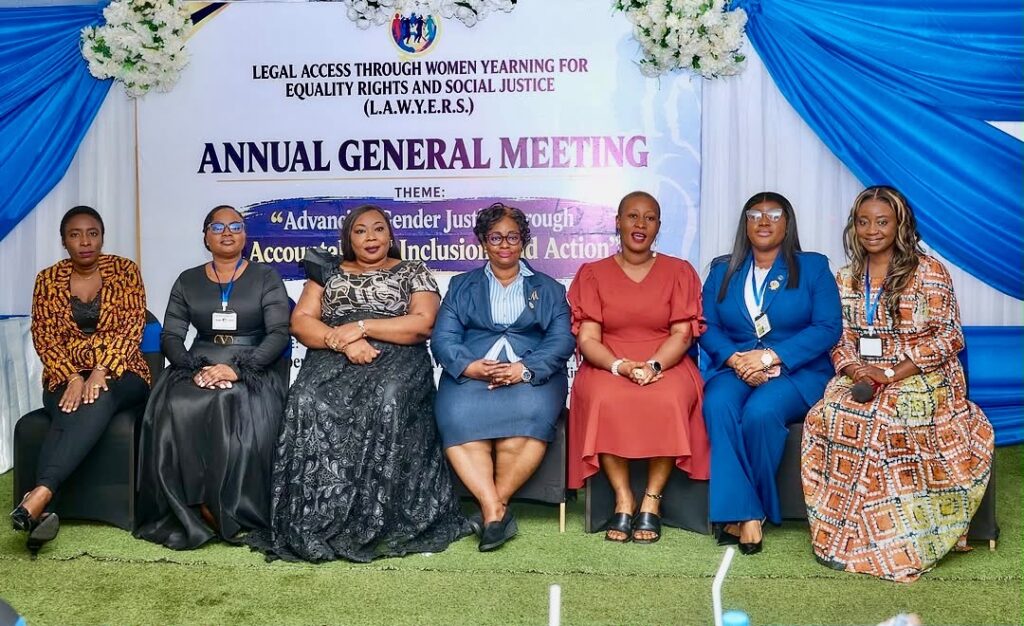
ANNUAL GENERAL MEETING 2026
Theme: Advancing Gender Justice through Accountability, Inclusion, and Action
Topic: Women in High Heels Also Cry: Rethinking Vulnerability and Gender Justice in Sierra Leone
Keynote Address Delivered by Marcella Samba-Sesay, Executive Director, Campaign for Good Governance (CGG), 16th October 2026, Saphyre Multi-Purpose Hall, Kingharman Road, Freetown
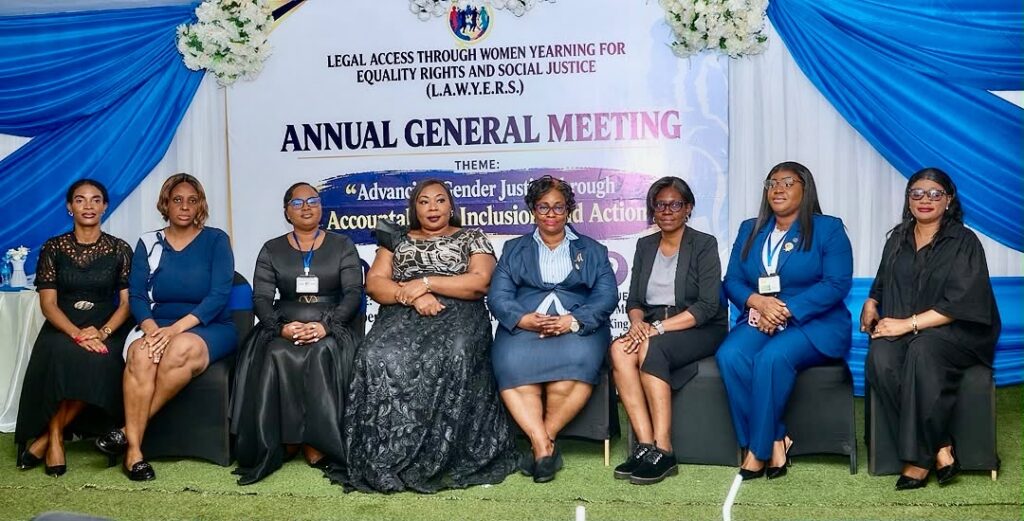
Distinguished Legal minds, both Ladies and gentlemen, I bring you warm greetings from Campaign for Good Governance (CGG), a 30-year advocacy outfit on voice, rights and women’s empowerment in Sierra Leone, where I serve as the Executive Director.
I am deeply grateful to L.A.W.Y.E.R.S for this opportunity to serve as Keynote Speaker at your 2026 Annual General Meeting (AGM), on the theme “Advancing Gender Justice through Accountability, Inclusion, and Action.” I do not take this assignment lightly, as every platform that brings women together offers an opportunity to advance our collective advocacy for women’s empowerment, good governance, rights, and voice.
Today, I intend to be pragmatic. I want to lay bare the realities of gender justice for us as women and what inclusion truly means for women in Sierra Leonean society. Until we understand these two concepts and how they manifest in our society, we cannot identify the true pathway to accountability and meaningful action.
I pulled up some statistics, and the figures on abuse are overwhelming. Rainbo Initiative recorded over 3,055 cases of sexual and gender-based violence across its centres in 2025. In other instances, survivors were as young as six months and as old as ninety-seven years. As Daniel Kettor of Rainbo Initiative reminded us, “These numbers are not abstract; they represent real lives. They are our daughters, mothers, sisters and wives”(Spotlight Initiative to end Violence Against Women and Girls in Sierra Leone).
Grim as these figures are, they are not the full picture. Many have been left out of this data. So today, I choose to tell the full story. In Sierra Leone, we have been economical with our analysis of gender-based violence: who the targets and victims are, the injustices it poses, the attendant abuse, and the gross violations of women’s rights across the spectrum. It’s safer and perhaps more fashionable to talk about providing legal aid and services for vulnerable women, and when we are asked who these women are, we readily name them: rural women, women living with disabilities, women in our communities, our maids. But let me shock you and bring this painful truth into public discourse today: women in high heels suffer Sexual and Gender-Based Violence. I therefore title my Address “Women in High Heels Also Cry: Rethinking Vulnerability and Gender Justice.”
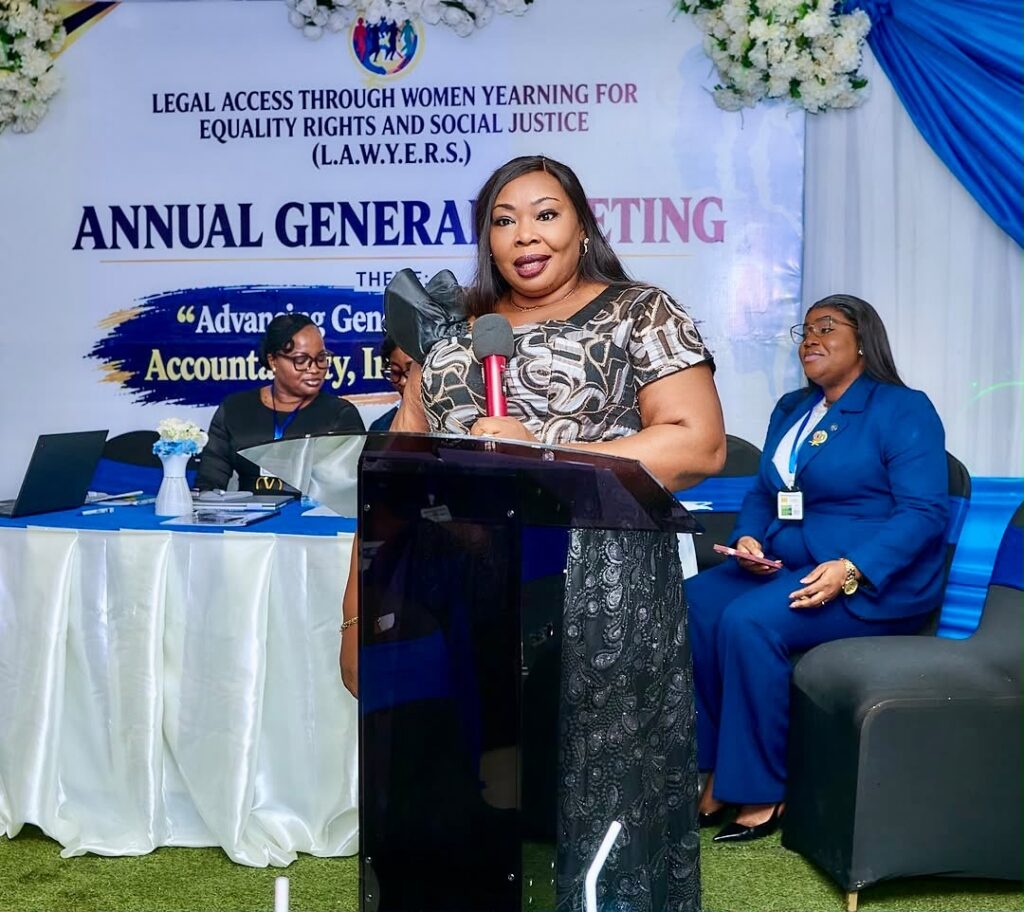
Sadly, women in high heels also cry, but often in isolation. They have mastered the art of endurance, and those who cannot endure any longer sometimes suffer in silence because we, as a society, have conditioned them to do so. This has been the missing piece in our advocacy for many years. We have failed to paint a holistic picture that captures the full spectrum of women affected by gender-based injustices, regardless of their social, economic, or professional status.
The cynicism among us, elite women in Sierra Leone, must stop. Violations of our bodily integrity and personal dignity are real, irrespective of social status. We must stop perpetuating a false narrative that suggests otherwise. In this day and age, it is no longer acceptable to suffer in silence. We must speak out, break the culture of silence, and confront gender-based injustices wherever they occur.
Today, we are moving beyond the courtroom to advocate for justice for women everywhere, from our communities, including our domestic workers and market women, to our homes, offices, universities, and the byways and highways of our society. Gender-based violations are real, pervasive, and manifest in different forms, including the following:
Husband-wife
Lecturer-students
Male bosses- female employees The list goes now.
We live in a society where elite women suffer, become disabled, and even lose their lives because of the devastating and life-altering impact of gender-based violence. No category of women is exempt, not even those of us in black suits and high heels. So, the picture we present is only a half-truth; we have failed to address the full spectrum of who the victims of gender-based injustices are; we have therefore been limited in taking the right action to address the question of accountability. This has created a significant accountability deficit, compounded by the stark discrepancies in how these violations occur, are experienced, and are addressed.
This is why when we design programmes on gender justice, we tend to focus on women we identify as ‘vulnerable’, often leaving ourselves out of the conversation. We must broaden our perspective and recognise that gender-based injustice cuts across social, economic, and professional boundaries. Gender justice must include all women, including us.
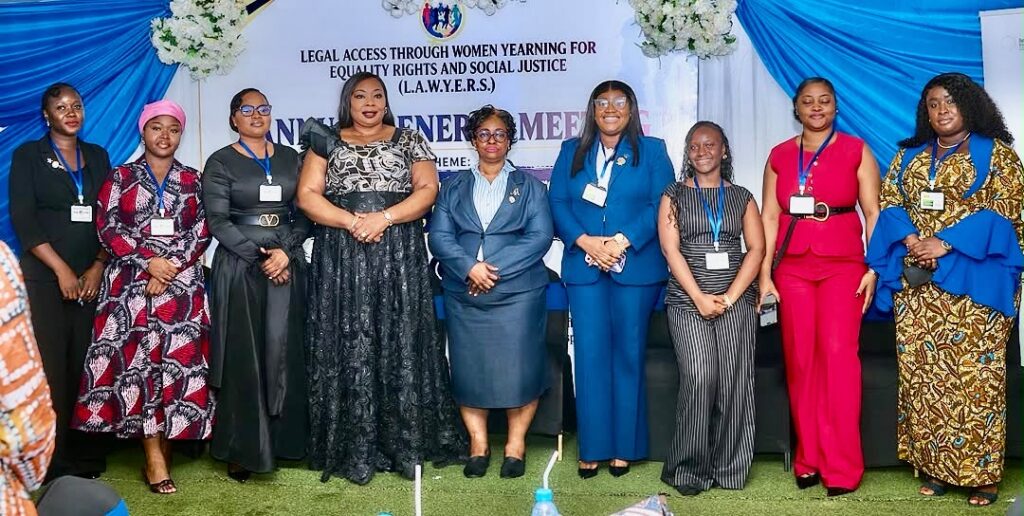
Yes, we are fighting for vulnerable women, and rightly so, because they have rights that must be protected. However, the reality is that we live in a patriarchal society where gender inequality and violations of women’s rights are deeply entrenched. We must collectively agree to name these problems, stand in solidarity with women in high-ranking positions when they experience such violations, and confront these injustices, whether through legal, political, or moral actions. We must send a strong and unequivocal message: enough is enough!
This is the formidable collective action envisioned in your theme this year. It can serve as a catalyst for change, sending a powerful message that resonates across all strata of Sierra Leonean society. Gender justice cannot be achieved if we remain silent about violations against some women while advocating for the rights of others. Our solidarity must be universal, our accountability uncompromising, and our action collective.
My Lady lawyers, if we want accountability for action, we have to start from the top; the grassroots approach is painful, slow and tortuous.
We have passively, if not actively, condoned violations against highly placed women in society and we think it’s normal. We have normalised violations of the rights of public-facing women, and the effect on society is huge. If highly placed women suffer this abuse, how about the community woman – in local parlance: “if the breeze ker mota odoo na fana he go lef”.
In 2022, Sierra Leone constructed a legal and policy framework for gender equality through the enactment of the Gender Equality and Women’s Empowerment (GEWE) Act 2022. Whether you accept it or not, it is exemplary legislation in many respects and enviable on the African continent. As President Julius Maada Bio himself described it, the GEWE Act “represents a significant legislative intervention to address gender disparities and create greater opportunities for women to” participate in leadership, governance, employment, and economic activities”. Among its most notable provisions is the mandate that no less than thirty per cent of parliamentary and local council candidates from political parties be women—a quota that, if fully implemented, would transform the face of political representation in Sierra Leone. We have done a lot of work with the laws. The GEWE Act did not emerge in a vacuum. It builds upon a foundation laid over two decades. The Domestic Violence Act 2007, the Devolution of Estates Act 2007, the Registration of Customary Marriage and Divorce Act 2009, and the Sexual Offences Act 2012 collectively represent a sustained legislative effort to bring Sierra Leone’s domestic law into conformity with its international obligations under the Convention on the Elimination of All Forms of Discrimination against Women (CEDAW) and the Maputo Protocol.
Quite recently, child marriage was set at the minimum age of eighteen years, a legal reform which we all applaud. But the reality is that countless girls are abused by men old enough to be their grandfathers, and in the city, not in rural communities, and we think its normal. These so-called big men are bigger than the court. In such circumstances, the law becomes an instrument of oppression, and a sword against impunity.
Today, I will argue that a superstructure of male dominance, negative masculinity and cynicism among female enablers breeds a culture of gender injustice in Sierra Leone, which all these laws cannot address.
In fact, female enablers of negative masculinity are quick to subject other women’s predicaments to gossip, bickering, labelling and shaming. Moreover, it is only in Sierra Leone that a woman or girl child is abused, and we shame the victim instead of the perpetrator.
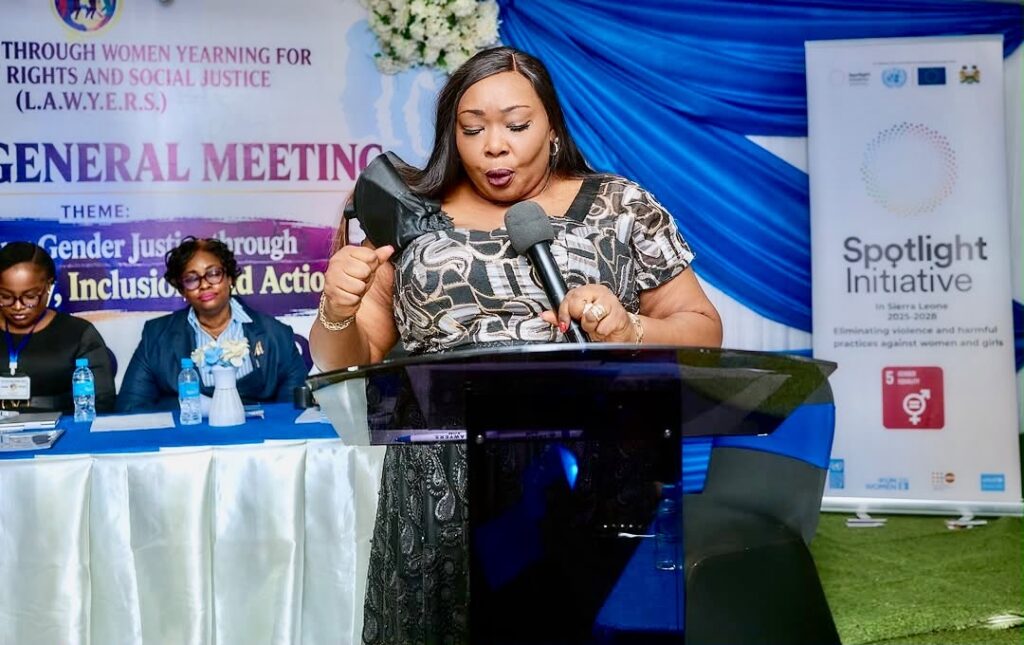
You are LAWYERS -YES, your business is in the courtroom; yes, you grapple with the law; yes, you take action for vulnerable women; yes, but there are circumstances in the wider society that impact and slow the outputs of our work, which require our collective resolve.
Today, there are newer forms of technology-facilitated gender-based violence that none of us is absolved of. As women, we have to demonstrate that these violations are fearful and painful -revenge pawn, body-shaming, reputational damage. The very virtues that women guard, are currently under attack.
To conclude, permit me to summarise: my main argument is that a proper understanding of gender justice and the quest for accountability require action that goes beyond the courtroom. The reality is that many perpetrators of gender-based violence never darken the doors of a courtroom. They are in our homes, among men in suits, in our banks, and in our universities. The victims, too, are in these spaces, women in high heels and suits who suffer, cry, and endure in silence. In fact, young women have learnt to normalise the pain. They will tell you crying in a Lamborghini is better than crying in a “keke” (Rickshaw). That’s endurance; the truth is, as women, we face violation everywhere, because crying exists everywhere. Violence against women and the consequences in our society are seriously underrated.
Violence against women and its devastating consequences in our society are grossly underestimated. There is an entire architecture of gender-based violence that must be demolished. Yet, the actions we design to address vulnerability in our context are often inadequately framed and fail to capture the full spectrum of women’s experiences.
Consider this: the woman in the community may be unable to access justice because she cannot afford a lawyer. The woman in high heels, on the other hand, may be stigmatised and judged if she dares to seek redress. One is constrained by financial barriers; the other by social stigma and the pressure to protect her status and reputation. Both are victims of gender injustice, but their experiences and barriers to justice may differ.
Think about it. If our understanding of vulnerability excludes women in high heels, then our approach to gender justice remains incomplete. We must confront the structures, attitudes, and institutional practices that allow sexual and gender-based violence to persist, both inside and outside the courtroom.
L.A.W.Y.E.R.S., today, I have contextualised the definition of vulnerability to include us, women in high heels. SO, REDESIGN YOUR STRATEGIES AND TAKE ACTION! LET THE LAW BE A SHIELD FOR WOMEN. I THANK YOU FOR YOUR RAFT ATTENTION.