
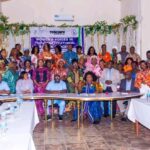
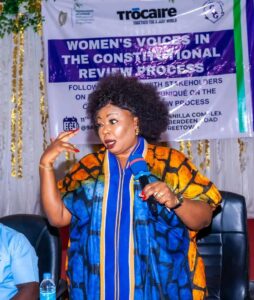
Freetown, Sierra Leone Campaign for Good Governance (CGG), in collaboration with its partners through the National Advocacy for Women’s Empowerment (NAWE) project, has brought together women leaders from across Sierra Leone’s 16 districts to discuss outstanding issues in the ongoing constitutional review process, with a particular focus on strengthening women’s representation and ensuring that women’s priorities are reflected in proposed constitutional reforms.
Supported by Irish Aid through the Irish Civil Society Partnership Program (ICSP), in partnership with Trócaire, the engagement provided a platform for women leaders and key stakeholders to assess progress in the constitutional review process, examine issues of concern to women, and identify practical strategies for sustained advocacy and engagement with Parliament, the Attorney General and other relevant institutions.
11/9/2026 at vanilla Complex Aberdeen Free Town Sierra Leone
Advancing Women’s Representation
A major issue discussed was the proposed minimum 30 percent representation for women in governance and decision making.
Participants emphasized that achieving meaningful representation requires more than establishing a numerical target. They called for clear mechanisms to ensure that women are nominated, positioned and supported to secure elected and appointed positions, including competitive positions within political party structures and candidate lists.
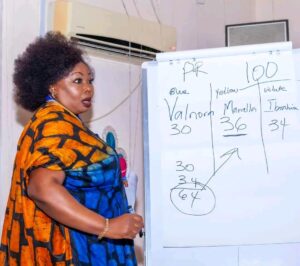
Governance Expert Ibrahim Bangura Esq., who provided an overview of the Constitutional Amendment Bill 2025, highlighted proposed reforms relating to electoral institutions, proportional representation, presidential elections, fixed election dates, independent candidacy, executive transition and security sector governance.
Mr. Bangura emphasised that the proposed 30 percent representation should be treated as a minimum rather than a ceiling, while underscoring the need for clarity on how women would be nominated, positioned and elected under the proposed arrangements.
The discussion also highlighted the importance of ensuring that women’s representation extends beyond parliamentary seats to other influential spaces, including parliamentary committees, leadership positions, commissions, local government and other decision-making structures.
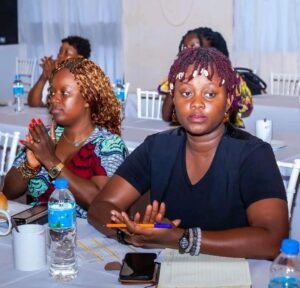
Women’s Priorities for Constitutional Reform
The engagement drew attention to the broader recommendations advanced by women during the constitutional review process.
These recommendations seek to strengthen constitutional guarantees for gender equality, women’s political participation, socio-economic rights and protection against discrimination.
Among the key priorities are:
- Equality and non-discrimination: Amending Section 27 to guarantee equality between women and men and eliminate discriminatory constitutional provisions.
- Political representation and affirmative action: Guaranteeing at least 30 percent representation of women among candidates nominated by political parties and in Parliament, while promoting balanced representation in elective and appointed bodies.
- Equal citizenship rights: Strengthening women’s equal citizenship rights and removing discriminatory provisions relating to citizenship and marriage.
- Women’s health and education: Making socio-economic rights enforceable and guaranteeing access to adequate health and educational facilities, including specific consideration of women’s health needs.
- Protection of vulnerable women: Strengthening protections for women in detention, particularly pregnant and lactating women and women with disabilities.
- Leadership and decision-making: Promoting women’s equality in leadership positions, including Cabinet, Parliament, local government, commissions and independent offices.
- Participation in political parties: Strengthening women’s participation in political parties and public decision-making.
- Constitutional mechanisms for women’s empowerment: Establishing mechanisms that advance women’s equality and empowerment in governance and national development.
These priorities form part of the 16 recommendations advanced by women stakeholders during the constitutional review process.
Taking the Conversation to Communities
The Senior Programmes Manager at CGG, Sahr Kendema, said the engagement formed part of the organisation’s continued efforts to ensure that women remain actively engaged in the constitutional review process.
He explained that the outstanding issues, recommendations and strategies emerging from the meeting would be consolidated to inform a roadmap for continued engagement with Parliament, the Attorney-General and other relevant stakeholders.
He further noted that women leaders participating in the engagement have an important role in taking the discussion beyond Freetown and into their respective communities, enabling more women to understand the proposed reforms and participate meaningfully in the national conversation.
At the Ministry of Gender and Children’s Affairs, Chief Director Charles Vandy called for the proposed 30 percent minimum representation to extend beyond parliamentary seats to parliamentary committees, leadership positions and other key decision-making structures.
He also emphasised the need for greater inclusion of young women, women with disabilities and other underrepresented groups in governance and decision-making.
Women Parliamentarians Call for Practical Implementation
Hon. Rebecca Yei Sam, Member of Parliament for Kono District and Secretary General of the Parliamentary Female Caucus, stressed the importance of ensuring that women are adequately informed about the constitutional review process and the issues still under consideration.
She called for increased grassroots sensitisation and encouraged development partners and civil society organisations to support women leaders to take the discussions to communities across the country.
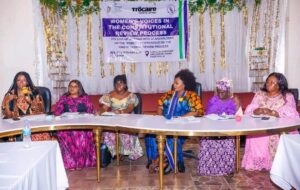
Hon. Yei Sam also encouraged women to engage political parties and electoral authorities on the practical implementation of proportional representation, including how seats would be calculated and how women would be positioned on party candidate lists.
Similarly, Hon. Rose Marie Bangura, APC Member of Parliament and Vice President of the West African Parliamentary Female Caucus, called on political parties to place women in leading and winnable positions on their candidate lists.
She noted that meaningful positioning of women within competitive spaces would improve their prospects of securing elected office.
Strengthening Grassroots Participation
Trócaire Country Director George Were encouraged stronger participation by women through Community-Based Organizations (CBOs), noting that grassroots structures can provide women with platforms to influence decisions affecting their communities.
The engagement reaffirmed the importance of sustained, coordinated advocacy as Sierra Leone’s constitutional review process continues.
CGG and its partners will continue working with women leaders, communities, political parties, Parliament, the Attorney General and other relevant stakeholders to advance dialogue on the proposed constitutional reforms and strengthen women’s participation in governance.
For CGG, ensuring that women’s voices are reflected in constitutional reform is not only about representation is about building a governance framework in which women can participate equally, influence decisions and contribute meaningfully to Sierra Leone’s democratic development.