
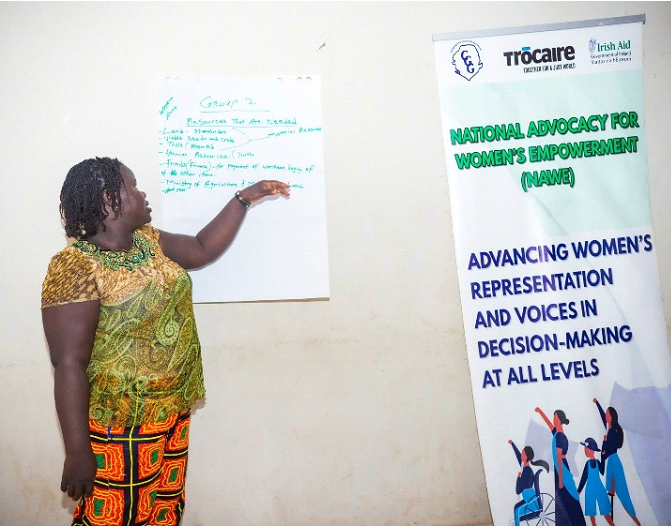
In 2024, Campaign for Good Governance (#CGG), through the Irish Civil Society Partnership (#ICSP) Project supported by Trocaire-Sierra Leone and Irish Aid, established the Network of Female Councilors–Sierra Leone (NFC-SL). The network was created to strengthen the leadership and decision-making capacities of female councilors within Sierra Leone’s local government sector.
This initiative empowers women councilors to play a more active and influential role in local governance, including decision-making, policy development, and implementation. It also creates opportunities for peer learning, networking, advocacy, and meaningful engagement with communities, thereby enhancing the effectiveness of women leaders as agents of change.
CGG in collaboration with the #MoGCA with support from Trocaire and IrishAid facilitated the official launch of the Network (NFC-SL) on 31st October 2024, by the Minister of Local Government and Community Affairs (Hon. Tamba John Lamina), marking a significant milestone in advancing women’s political participation and leadership in local governance.
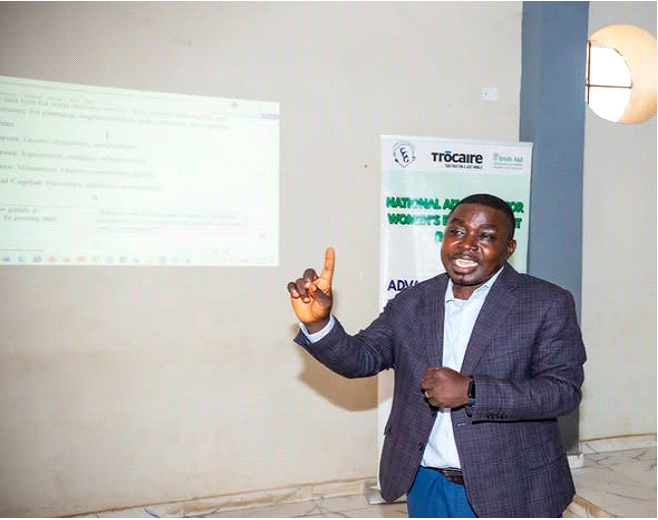
In 2025, following a series of capacity-building interventions for network members, CGG conducted a regional follow-up assessment across the five regional headquarters. The assessment brought together female councillors and women leaders to evaluate the impact of the trainings within their respective districts and communities.
The exercise enabled CGG to track the contributions of female councillors to local development and women’s empowerment initiatives through the application of knowledge and skills acquired during the ICSP Year Two trainings by CGG in 2024. The training courses focused on councillors’ roles and responsibilities, leadership, collaboration, networking, and lobbying skills. The assessment also identified key challenges affecting female councillors in the discharge of their duties and generated recommendations aimed at addressing barriers to women’s effective participation in local governance and development processes across Sierra Leone.
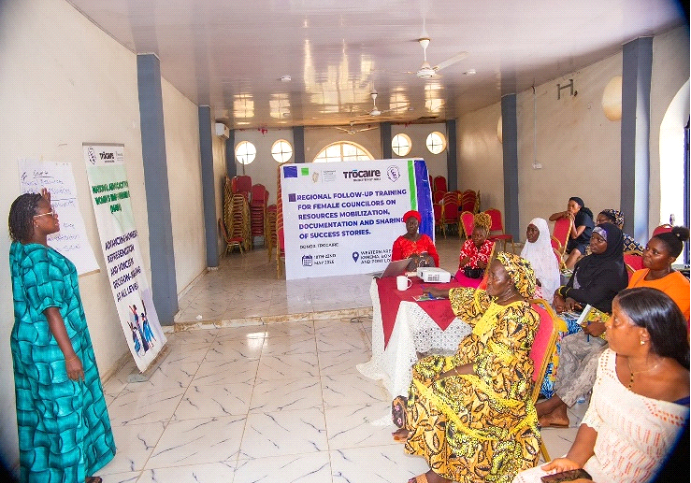
One of the key recommendations that emerged from the assessment highlighted the need for enhanced resource mobilisation skills among women councillors. Participants noted that many development and service delivery initiatives are financed largely through devolved sector funds and personal contributions, with limited utilisation of other resource opportunities such as in-kind support, business partnerships, fundraising initiatives, and Corporate Social Responsibility (CSR) engagement with private sector actors. Female councillors therefore recommended targeted training in resource mobilisation to strengthen their capacity to access and leverage diverse resources for community development.
In response to this recommendation, CGG through the ICSP Year Four Project, conducted regional trainings for female councilors and women leaders on resource mobilization as well as on how to document and share success stories from 18–22 May 2026 in each of the regional headquarters of Sierra Leone.
The training focused on practical approaches to identifying, accessing, and mobilising resources to support local development and women’s empowerment initiatives. Participants also received training on documentation, storytelling, and strategic communication, including how to document interventions and share success stories through various media platforms.
This component of the training was designed to address concerns frequently raised by female councillors regarding the limited visibility of their contributions. While many women leaders are actively implementing development initiatives within their communities, inadequate documentation and publicity often prevent their achievements from being widely recognised. The training therefore contributed to enhancing participants’ capacity to effectively showcase their work and demonstrate their impact on local development.
CGG is pleased to have facilitated this important capacity-building initiative. The application of the skills acquired through the training enables female councillors and women leaders to mobilise resources more effectively, strengthen development interventions, and contribute meaningfully to community development and women’s empowerment across Sierra Leone’s sixteen administrative districts.
The enhanced knowledge and skills in documentation and strategic communication will contribute to greater visibility, recognition, and appreciation of female councillors’ achievements. This will not only strengthen public awareness of their contributions but also enhance their confidence, credibility, and preparedness for future leadership opportunities, including the 2028 multi-tier elections.
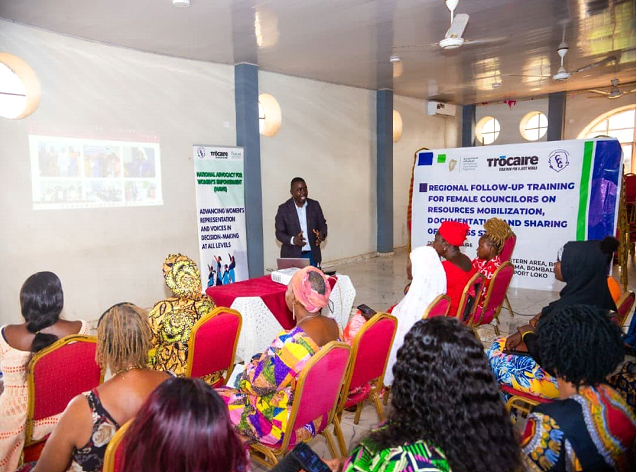
Here are some voices from the Participants
Councillor Hawa Campbell, Deputy Mayor, Bo City Council
“The training has strengthened our capacity as female councillors to mobilise resources and support women’s empowerment initiatives within our districts.”
Councillor Rugiatu S. Koroma, Deputy Mayor, Kenema City Council
“The skills acquired through this training will be utilised to mobilise resources in support of development initiatives that will contribute significantly to community development and women’s empowerment across our districts.”
Councillor Doris B. Momoh, Deputy Chairperson, Kailahun District Council
“This training is timely and highly relevant. It has enhanced our understanding of resource mobilisation and provided valuable knowledge on how to effectively showcase our contributions to development initiatives within our districts.”
Councillor Esther P. Kargbo, Bombali District Council
“The training was highly impactful and beneficial to me. It helped me realise that the work I do within my community should not remain unseen. I have learned the importance of sharing my achievements and activities on social media so that people can better understand and appreciate the contributions I make as a female councillor. I also call upon development partners and donors to continue supporting CGG so that similar capacity-building initiatives can be sustained and expanded to benefit more women leaders.”
Councillor Aminata Bangura, Deputy Mayor, Port Loko City Council
“The training has been highly educational and valuable. It has broadened my understanding of resource mobilisation and equipped me with practical knowledge on how to mobilise different types of resources to support my community. Prior to this training, my knowledge of resource mobilisation was limited.“
Councillor Halimatu H. Kamara, Chairperson, Education Committee, Western Area District Council
“The training was extremely valuable and informative. I gained significant knowledge on resource mobilisation and the various avenues through which resources can be accessed. The sessions also enhanced my understanding of documentation and visibility, particularly the importance of showcasing and documenting community work.
Prior to this training, I was unaware of the need, as a councillor, to document my activities and share my achievements on social media. Today, I have come to appreciate the importance of making our work visible and accessible to the public. This training has had a profound impact on me, and I am committed to sharing the knowledge and insights gained with fellow councillors who were unable to attend.”
These voices/testimonies show impact and CGG is inspired and remains committed to advancing women’s leadership, political participation, and empowerment across Sierra Leone. Through strategic partnerships and targeted capacity-building initiatives, the organisation will continue to support female councillors and women leaders in strengthening their influence, effectiveness, and contributions to local development.
CGG remain committed to supporting women’s empowerment initiatives. Thanks to Trocaire and IrishAid for supporting this initiative through the ICSP project, which is contributing to build stronger women’s groups, leadership, more inclusive, and gender-responsive local governance systems in Sierra Leone.
About Campaign for Good Governance (CGG)
CGG is a National Non-Governmental Organization (NGO) established by proponents of the prodemocracy movement in Sierra Leone on the 1st July 1996 with a mission to increase citizens participation in governance through advocacy, capacity-building, and civic education to build an informed populace and a strong democratic state